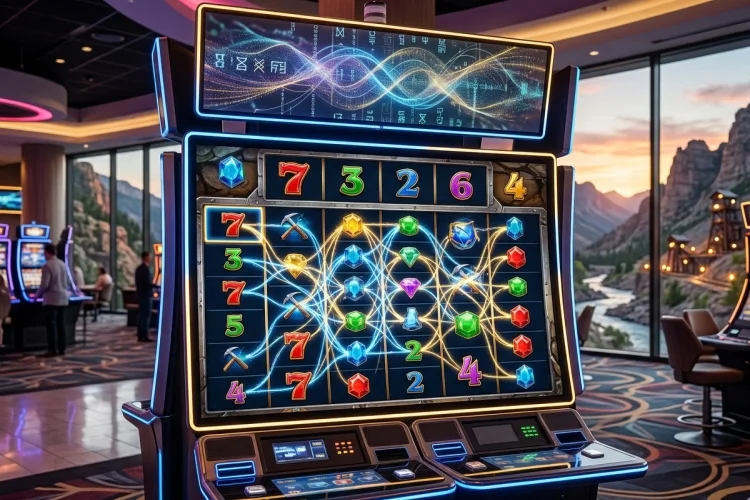

Progressive Jackpot Slots: How Do Local and Network Games Work?
One progressive jackpot may be connected to a single slot, while another can collect contributions from games offered across many casinos. Both may display a growing prize meter, but the size of the network can greatly influence how quickly the amount increases.
This difference explains why some jackpots remain relatively modest and others reach multimillion-dollar totals. A standalone machine has a limited source of qualifying wagers.
A wide-area or online network can combine activity from a much larger number of players and participating games.
This guide explains progressive jackpot slots and how they work across standalone, local, multi-level, and networked systems. It also examines shared prize pools, seed values, jackpot triggers, simultaneous wins, and regional restrictions.
The network size does not determine whether a particular player will win. A larger pool may grow faster, but it can also involve many more qualifying wagers from other participants. Players should focus on the game rules and affordability rather than the size of the displayed meter alone.
Standalone Progressive Jackpots
A standalone progressive is connected to one game or individual machine. Its prize grows only through activity generated by that specific product.
Because the contribution source is limited, standalone jackpots commonly increase more slowly than prizes connected to several machines or online casinos. However, the exact growth rate depends on the wager volume and contribution percentage.
The game still needs a starting or seed amount. After someone wins, the displayed prize returns to that reset value instead of disappearing completely.
A standalone progressive may use a traditional reel combination, bonus feature, collection mechanic, or mystery trigger. The label describes the scope of the prize pool, not the way it must be awarded.
Local and Linked Progressive Systems
A local progressive connects several games within the same casino, website, or limited group of venues. Qualifying bets from every connected game can contribute to one shared pool.
For example, ten compatible slots on one casino floor might feed the same Grand jackpot. Online games can also share a prize within one operator or a restricted market.
The UK Gambling Commission’s machine classifications recognise linked progressive jackpots operating on a premises basis in certain regulated settings. This illustrates how jackpot networks may be legally limited by location and product category.
A locally linked prize can increase faster than a standalone jackpot because more wagers contribute to it, but it generally has a smaller reach than a wide-area network.
Wide-Area and Online Network Jackpots
Wide-area progressives connect games across multiple casinos or locations. Online equivalents may link eligible titles across different operator websites through a central game-provider network.
IGT describes its wide-area progressive products as linked jackpot systems designed to offer large prizes across participating properties. Games Global similarly operates networks containing titles connected to jackpot brands such as Mega Moolah and WowPot.
Because a network can process extensive total wagering, its top prize may grow quickly. The jackpot controller keeps track of qualifying contributions, current values, triggers, and resets.
A network prize may also be ring-fenced by jurisdiction. Players in one regulated market might contribute to a separate pool rather than the global jackpot. Games Global, for example, has described Maple Moolah as a jackpot created specifically for the regulated Ontario market.
How Shared Contributions Build the Pool
Every participating game follows rules governing which wagers qualify and how much is added to each prize level. The progressive contribution may be a fixed percentage of eligible turnover.
Imagine that five casinos generate a combined $2 million in qualifying bets. If 0.5% is directed to a shared jackpot, the pool would increase by $10,000.
This calculation is simplified because real systems may divide contributions across multiple tiers or diversion pools. A portion can support the current jackpot, while another amount helps prepare the reset value for the next cycle.
The UK Gambling Commission requires jackpot rules to describe how the prize is funded, including the seed and any ceiling values.
Why Progressive Games Have Several Tiers
Networked slots often include several prize levels so that not every jackpot event needs to award the largest amount. A game might contain Mini, Minor, Major, and Mega tiers.
Smaller prizes may reset to fixed starting values and be triggered through different events. The top jackpot usually receives the greatest attention because it can continue increasing across the entire network.
Mega Moolah is officially described as a four-reel slot containing four progressive jackpot tiers. WowPot is another network with four tiers, including a large top jackpot seeded at a substantial starting amount.
The chance of receiving each level should be evaluated through the game rules. A smaller displayed tier is not automatically easy to win.
What Happens When Two Players Trigger a Jackpot?
A connected system needs procedures for situations in which two qualifying events occur almost simultaneously. The jackpot controller records the timing and determines the valid prize according to the approved rules.
Technical standards require progressive systems to handle jackpot notifications, timestamps, reset periods, and simultaneous winning events fairly. They also require the award shown when the jackpot was triggered to be recorded accurately.
The exact outcome may depend on the system. Simultaneous winners could share a prize, receive separate awards, or be paid according to another stated process.
These are uncommon situations, but their inclusion in technical standards demonstrates why progressive networks require more infrastructure than ordinary fixed-prize slots.
Jackpot Eligibility Across a Network
Seeing a jackpot meter does not always mean every bet qualifies. Eligibility may depend on the game version, stake, coin value, country, or operator.
Some games increase the probability of entering a jackpot feature when the wager is raised. Others provide equal jackpot eligibility at all accepted bet levels. The rules must explain the relationship between stake and the chance of winning.
Players should also confirm that they are connected to the advertised prize pool. Regulatory guidance requires games to make it clear when a customer is not eligible for the progressive prize and to provide the appropriate theoretical RTP.
Never assume that a demo version, promotional spin, or bonus-funded wager qualifies unless the conditions explicitly say so.
Progressive jackpot networks can operate at several scales. A standalone game builds its own pool, a local system links a limited group of slots, and a wide-area network combines qualifying activity across multiple casinos or online operators.
Larger networks can support rapidly growing prizes, while regional rules may create separate ring-fenced pools. Multi-level systems divide the experience among smaller jackpots and a major top award.
Before wagering, verify which network the game uses, how the prize grows, what stake qualifies, and how the jackpot is triggered.
Read the current rules and RTP information, choose licensed operators, and establish an affordable limit. A larger network can produce a larger prize, but it never guarantees an individual win.