
Live Casino vs. Traditional Online Casino Games: How They Work
A virtual roulette wheel and a streamed live roulette table may look similar on the screen, but the systems behind them are fundamentally different. One uses software to generate and display the entire round. The other broadcasts a real wheel while digital tools record and settle online bets.
The same distinction applies to blackjack and baccarat. An automated version creates cards through approved software, whereas a live table uses cards physically handled by a dealer in a studio.
Understanding live casino vs. traditional online casino games is useful because presentation alone does not explain how results are formed. Players should know whether the game relies on an RNG or physical equipment, how the wager is transmitted, and what happens if the connection fails.
Both formats remain gambling products rather than predictable competitions. Technology can support accurate results and transparent records, but it cannot guarantee that a player will win or recover previous losses.
Result Generation in Automated Games
Many traditional online games rely on RNG technology. The generator produces numerical values, which the game converts into cards, symbols, dice totals, or virtual wheel results.
The visual animation usually presents a result that has already been selected by the software. A longer reel spin or dramatic card reveal does not improve the probability of winning.
Regulated random games should generate outcomes that are unpredictable and statistically appropriate. The British Gambling Commission’s technical standards set fairness requirements for RNG-based gaming and other virtual events.
Result Generation at Live Tables
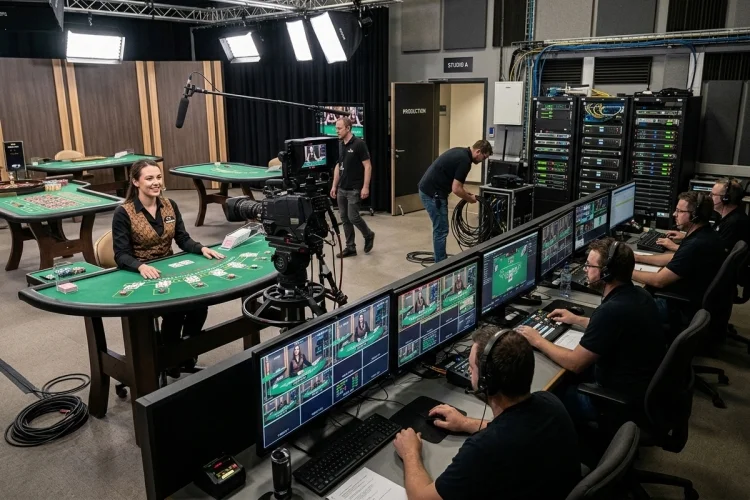
Live dealer outcomes come from real-world equipment. A roulette result is determined by the physical ball and wheel, while blackjack and baccarat use cards dealt at the studio.
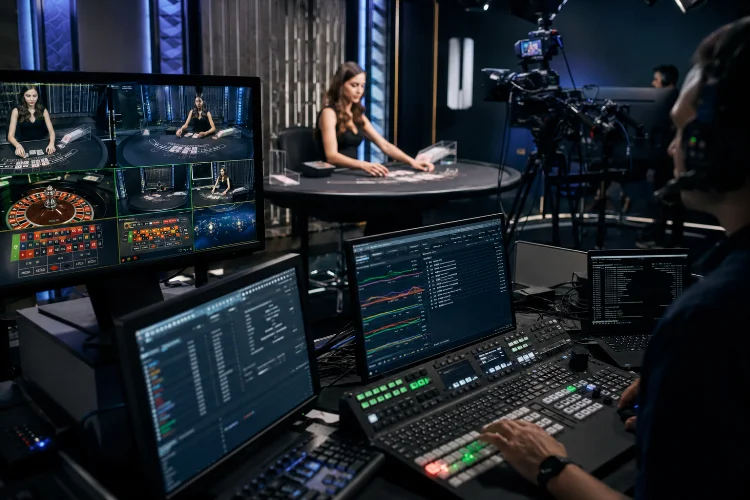
Cameras stream the action to the player’s device. Table systems record the game stage, accepted wagers, card information, or winning result so the platform can update balances.
Live games can be broadcast from dedicated studios or approved facilities. Evolution states that its live products include roulette, blackjack, baccarat, poker, and craps alongside hosted game-show formats.
The Role of Streaming and Software
A live game is not purely physical. It still depends on software to display chips, accept decisions, run betting timers, communicate results, and calculate payments.
The dealer does not personally move money between player accounts. Once the result is verified, the digital platform settles all accepted wagers according to the published table rules.
Remote systems should display clearly how much money is being wagered, including conversions into chips, credits, or other digital units.
Testing RNG Games
Automated games can be evaluated through code review, statistical testing, mathematical simulation, and examination of result mapping.
Approved testing procedures may compare a large volume of generated outcomes with the game’s intended probabilities and return model. The purpose is to determine whether the software operates according to its approved design.
Testing does not make a slot, blackjack game, or roulette round favorable to the player. A properly functioning random game can still produce long losing sequences.
Auditing Live Dealer Operations
Live studios require different safeguards. Operators must control physical equipment, consumable items, dealing procedures, surveillance, recording, maintenance, and investigation of disputed rounds.
British standards state that live dealer operations must be fair and independently auditable. Suitable procedures should exist for equipment such as cards and roulette components.
The visible dealer is only one part of the integrity process. Fairness also depends on the studio, software integration, records, operator, and regulator.
How Interruptions Are Handled
A digital game may complete on the server even if the player’s screen freezes. Similarly, a live table can continue operating when one participant loses the video connection.
Whether the wager remains valid depends on when it was accepted and on the operator’s interruption rules. Players should read those rules before participating rather than assuming every frozen round will be cancelled.
Regulated interruption policies should be fair, should not systematically disadvantage customers, and should explain how affected wagers are treated.
Which Format Provides More Transparency?
Live games make the physical action visible, which some players may find easier to follow. However, the video alone cannot prove that account balances, payments, or disputes are being managed correctly.
Automated games provide less visual evidence of result generation, so independent testing and regulatory oversight become particularly important.
In both cases, the strongest indicators are verifiable licensing, accessible rules, clear transaction records, fair terms, and recognized testing or audit procedures. Licensed operators are expected to make contractual terms accessible and transparent.
Traditional online casino games and live dealer products use different paths to reach a result. Automated games commonly rely on an RNG and software-based presentation. Live games use physical cards, wheels, or dice, supported by cameras, studio controls, and digital settlement systems.
Neither method should be judged by appearance alone. Fairness depends on technical standards, auditing, clear rules, secure records, and a legitimate operator.
Before playing, verify the licence, identify how the outcome is generated, and read the interruption and dispute policies. Set a fixed entertainment budget and stop at the planned limit. Technology can explain how a game operates, but it cannot transform an uncertain wager into guaranteed income.